
The deeper meaning behind your customer's purchase
Hi customer-obsessed friends,
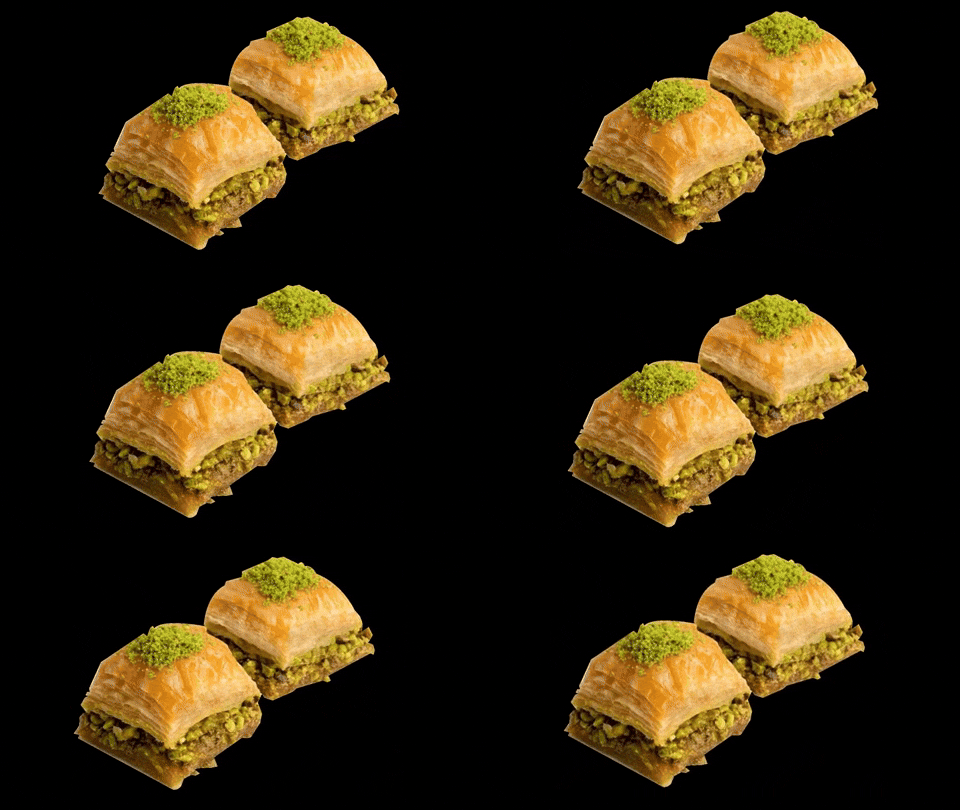
I bought a baklava keychain the other week. Yes, you read that right. A tiny, plastic pastry that will be added to my key fob. Half the transaction happened in German, so I'm hoping I placed the order correctly. Still waiting for it to come 😬.
Anyway, was it an impulse buy? Am I so obsessed with baklava that I need to make sure the world knows? Did I get suckered into buying it because of an Instagram ad? Maybe on that last one.
I guess the answer is that it reminds me of my culture, and I just thought it was fun. I can't count the number of times I've watched my mom make baklava over the years. I also liked that it's a family business that designs cool things. A little bit of nostalgia. A little bit of relatability.
With the pace at which AI is evolving, this is the "stuff" we can't forget about with our customers. There's a deeper connection behind the purchase and a "why." Not always. But often enough that you should be paying attention.
🧠 THE DEEPER PSYCHOLOGY OF PURCHASE DECISIONS
Customers don’t just buy products. They never have. They buy into stories, communities, and causes they believe in. When someone chooses your brand, they’re making three deeper purchases that go way beyond your actual product or service.
Let me break it down.
📖 Purchase #1: They’re buying your story
Every brand has a narrative. The question is whether you’re intentionally crafting it or letting it happen by accident.
Your story isn’t your founding tale or your company history page. It’s the meaning customers assign to their choice. When someone picks your product, what journey are they joining? Are they supporting innovation? Choosing sustainability? Embracing craftsmanship?
Think about Patagonia. When someone buys a $200 jacket, they’re not just getting outerwear. They’re buying into a story about environmental responsibility, adventure, and standing up to corporate greed. That jacket becomes part of their identity as someone who cares about the planet. And customers are proud of the quality.
Or consider Apple. When someone chooses an iPhone over an Android, they’re buying into a story about design, simplicity, and thinking differently. They’re saying something about who they are and what they value. For you iPhone users, think about how you pause (read: judge) for just a second when you get the green text bubbles vs. the blue text bubbles. Tsk tsk, elitist.
Your story becomes their story. And that story gets retold every time they use your product, recommend it to friends, or defend their choice in conversations.
👥 Purchase #2: They’re buying into your community
Humans are tribal creatures. We want to belong somewhere. We want to feel part of something bigger than a transaction. People want to be part of a community.
Think about SoulCycle before it became mainstream. Early riders weren’t just buying a workout; they were joining a community of people who believed in pushing limits, finding strength, and supporting each other through the intensity.
Your customers want to connect with others who “get it.” They want to be part of a tribe that shares their values, their aspirations, their view of the world.
📣 Purchase #3: They’re buying your cause
This is where it gets really interesting. Customers increasingly align with brands that fight for something they believe in. Whether it’s environmental impact, social justice, creative expression, or human connection, people want their purchases to contribute to the change they want to see in the world.
Take Ben & Jerry’s. You don’t just buy ice cream; you support criminal justice reform, climate action, and social equality. Your $6 pint becomes a small act of rebellion against injustice. Not surprising when their co-founder was arrested at a Senate hearing after protesting military aid being sent to Israel. I'm here for it. Some of you are just here for the ice cream, and that's okay, too.
🛠️ MAKING IT REAL: AUDIT YOUR THREE PURCHASES
Time for some honest self-reflection. Let’s audit what your customers are really buying:
Your story audit:
Start crafting your story intentionally. Stop talking about features and start talking about transformation. What journey are your customers on? What does choosing you say about their values, their aspirations, their identity?
What narrative do customers tell themselves when they choose you?
Does your story give meaning to their choice, or is it just product features
How does choosing your brand make them feel about themselves?
Your community audit:
Create spaces for your customers to connect with each other. Host events, build online communities, create shared experiences. Make them feel like they’re part of a tribe, not just a customer base.
Do your customers recognize each other? Do they feel connected?
What values does your customer base actually share?
Are you facilitating connections between customers, or just individual transactions?
Your cause audit:
What inefficiency or problem in the world does your brand exist to fight? Make that fight visible and give customers ways to join the cause.
What change are you trying to create in the world?
Do your customers understand and connect with that mission?
How does every purchase contribute to something bigger?
🎧 WHAT I'M LISTENING TO
Tyler Childers: Snipe Hunter
I'm a big Tyler Childers fan. Now, I don't think anything can top his albums, Purgatory and Live on Red Barn Radio I & II, but I'm always here for any new T.C. content. His latest album, "Snipe Hunter," is out.
Take a listen below, and let me know what you think!
💭 FINAL THOUGHTS
Have you made the connection that my baklava keychain is more than just a keychain?
Now ask yourself, what are your customers really buying when they choose you? Because once you understand that, everything else becomes clearer: your messaging, your community building, your product development, your customer experience.
AI can replicate almost any functional benefit, the brands that will do well will be the ones that understand the three deeper purchases: story, community and cause.
Start there. Everything else follows.
Thanks for reading.
